
Most Autistic adults carry some version of school trauma. The setting failed us early, and it failed us consistently, and many of us did not recover the relationship with learning that we might otherwise have had.
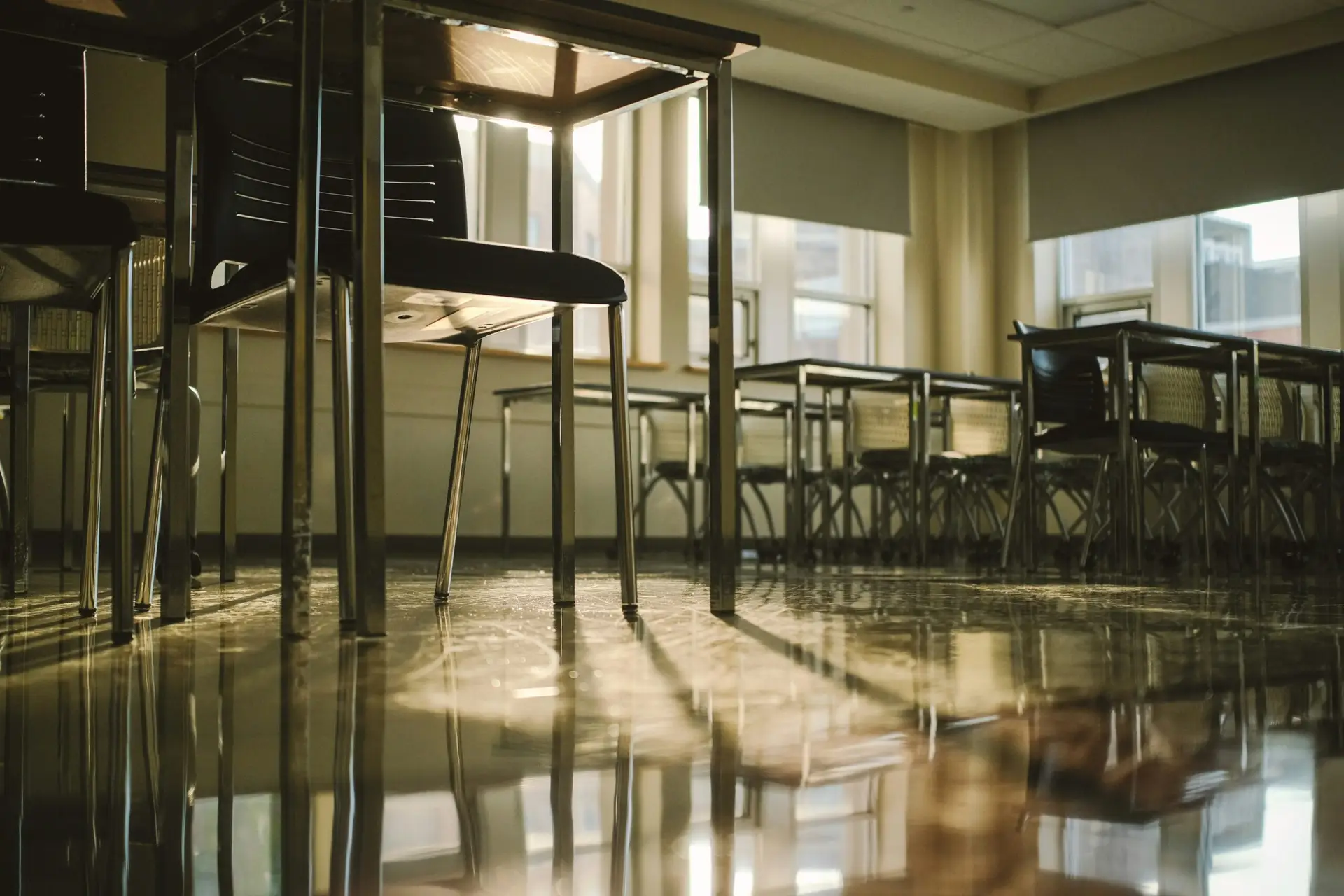
Classrooms are sensory environments that filter Autistic children out. Fluorescent light. Loud rooms. Crowded corridors. Unpredictable schedules. Teachers who rotate between moods. Playgrounds that operate on social rules we cannot read. Uniforms that hurt. Lunches that run on a clock and in a place that overwhelm us. Every element of this is standard in most schools, and every element of it is a problem for an Autistic child.
The classroom as sensory environment
The behavioural layer makes it worse. Autistic children who flap, who stim, who avoid eye contact, who speak out of turn because the internal filter is overwhelmed, are disciplined for behaviour that was, in fact, regulation. The discipline teaches them that the regulation was wrong. The regulation gets suppressed. The suppression becomes masking. The masking becomes burnout, later, at a cost the school never sees.
The academic layer is uneven. Some Autistic children find specific subjects straightforward and specific ones impossible. The system often reads the unevenness as laziness or as a behaviour problem rather than as an accurate picture of the cognitive profile in front of it. Support is unevenly distributed and often tied to diagnostic categories that older students may not have access to yet.
The behavioural layer
School refusal is not laziness. It is a child telling you, in the language available to them, that the setting is causing them harm. The correct response is to investigate the setting, not to force the child back into it. Schools that lean on the latter produce the adults we see in the burnout literature.
The fixes are known. Sensory-regulated classrooms. Predictable schedules. Visual timetables. Reasonable adjustments by default, not after a long battle. Neurodiversity-affirming teacher training. Autistic-specific support staff who are themselves Autistic. Uniforms that can be modified for sensory needs without fifteen forms. None of this is expensive relative to the cost of the children the system currently loses.
School refusal as message
For many of us, school was the first system that taught us we were wrong. A better school system is the one that teaches the next generation that they are not.