

Library / Watch / Think Autism Melbourne 2026

Argument, Think Autism Melbourne 2026
Workplaces can supply cupcakes for inclusion but cannot change the lights
In short
At Think Autism Melbourne in 2026, Shamus Hart called much workplace inclusion performative and said doing nothing still carries moral weight. Hannah Badenhop said neurodiversity is missing from many diversity policies.
Read it instead, 4 minutesThe transcript
The story
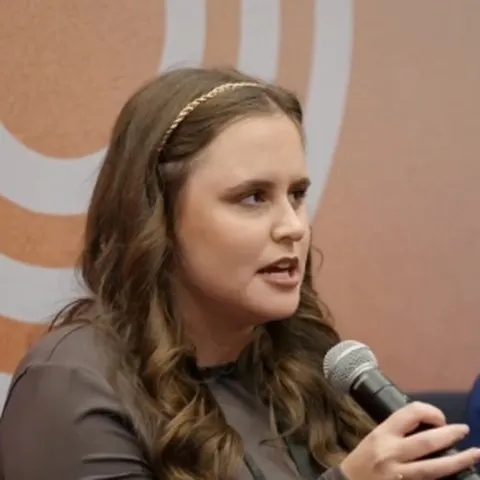
The test Shamus Hart applied to workplace inclusion at Think Autism Melbourne was whether an organisation would change anything that cost it effort. Asked by the facilitator, Anita Aherne, whether workplaces were becoming more inclusive or simply expecting autistic staff to mask better, Hart said many had become very good at the performative side, which Hart called the theatrics of inclusion. “I’ve had so many places that have amazing cupcakes, but you ask them to do something like put it in writing or even change the lights.” In Hart’s experience, they could not do it.
Aherne had framed the question around masking. Lived experience shows, Aherne said, that success at work can depend heavily on how well someone adapts their communication style, sensory needs and behaviour to fit the environment. That raised the question of whether workplaces were really changing, or whether autistic people still carried the burden of adapting to existing systems.
Sign in to keep reading, listening and watching.
Sign in with your email and everything in the Library is open to you: every story, every talk and every episode. It is free and it always will be. If you can, a donation helps keep it free for everyone.
Sources the story draws on
- Neurodiversity Data at Work: first-of-its-kind guide to advance workplace neuroinclusion (opens in a new tab), Diversity Council Australia
- Your rights as an employee under the Disability Discrimination Act 1992 (Cth) (opens in a new tab), Australian Human Rights Commission
- Independent evaluation shares findings on the impact of Autism SA's Neuro-Inclusive Recruiting resources (opens in a new tab), Autism SA
More from Think Autism Melbourne 2026
All 48-
 3 minutes 7 seconds, captioned Autistic burnout is different from tiredness, and a holiday does not fix it Anita Aherne, Hannah Badenhop and 1 more Opening a Think Autism Melbourne panel in 2026, Anita Aherne said workplaces still had no clear definition of autistic burnout. The panellists described what it is and why rest alone does not end it.
- 7 minutes 16 seconds, captioned Employers avoid naming autistic burnout because naming it creates liability Shamus Hart, Kathleen McCarthy At Think Autism Melbourne in 2026, Shamus Hart argued that risk averse organisations keep autistic burnout out of policy on purpose. Kathleen McCarthy described how risk systems turn it into a personal choice.
- 7 minutes 10 seconds, captioned Kathleen McCarthy was shut out of talks on her own workplace accommodations Kathleen McCarthy At Think Autism Melbourne in 2026, Kathleen McCarthy said her employer excluded her from discussions about her burnout because she had a vested interest. She argued that such a policy is worthless.
- 6 minutes 6 seconds, captioned Prevent autistic burnout by design, and ask the person what would help Shamus Hart At Think Autism Melbourne in 2026, a panel on autistic burnout heard that it largely disappears when supports are built in. Hannah Badenhop set out what that means for workplace policy, and the panel heard the case for asking the person in burnout.
- 10 minutes 30 seconds, captioned John Munro traced how an autistic student’s school day uses up working memory Professor John Munro At Think Autism Melbourne in 2026, Professor John Munro described how a classroom’s unspoken assumptions drain an autistic student’s thinking space as the day goes on, and said the system’s policies do not equip teachers to see it.
- 3 minutes 20 seconds, captioned Short time horizons and memories laid without feeling, explained from the stage Think Autism Melbourne 2026 When a speaker at Think Autism Melbourne described being thrown by any change to a familiar situation, a second speaker offered two ideas to explain it, and a teacher on the panel offered a classroom technique.