

Library / Watch / Autistic Pride Day Symposium 2023

Argument, Autistic Pride Day Symposium 2023
Neurotype, culture or disorder, the first symposium’s closing dialogue began with language
In short
Asked what autism is, speakers at the close of the 2023 Autistic Pride Day Symposium in Melbourne described a brain style and a culture, and split on whether the word disorder should stay.
Read it instead, 4 minutesThe transcript
The story
Kyriakos Gold, who hosted the session, opened the closing dialogue of Australia’s first Autistic Pride Day Symposium with the most basic question available. On 18 June 2023, in Melbourne, he asked the day’s speakers what autism is to them, and the answers set out the language problem that ran through the rest of the conversation.
The first panellist Gold asked said autism is a neurotype or a brain style, a way of describing neurological differences in how people interact with the world and how they perceive it. A second speaker built on that. Autistic people have a unique neurology that is different from the norm, the speaker said, one that is very sensory driven, with its own communication style that differs from the neuronormative population. Some autistic people, the speaker added, like to think about being autistic as a culture, recognising communication differences, sensory preferences and the other things autistic people do as part of who they are, in the way a cultural difference is.
Sign in to keep reading, listening and watching.
Sign in with your email and everything in the Library is open to you: every story, every talk and every episode. It is free and it always will be. If you can, a donation helps keep it free for everyone.
Sources the story draws on
- DSM-5: What Happened to Asperger's? (opens in a new tab), The Clay Center for Young Healthy Minds, Massachusetts General Hospital (Ellen Braaten)
- The misnomer of 'high functioning autism': Intelligence is an imprecise predictor of functional abilities at diagnosis (opens in a new tab), Autism, vol. 24, no. 1 (Alvares, Bebbington, Cleary, Evans, Glasson, Maybery, Pillar, Uljarević, Varcin, Wray and Whitehouse), record on Griffith University Research Repository
More from Autistic Pride Day Symposium 2023
All 29- 2 minutes 20 seconds, captioned A panellist argued autism research had been built through a white, male, cisgender lens Autistic Pride Day Symposium 2023 Asked to explain intersectionality at the closing dialogue of the 2023 Autistic Pride Day Symposium, a panellist asked who had shaped the field’s understanding of autism, and whose lives it left out.
- 3 minutes 50 seconds, captioned A panellist warned that anti trans politics was weaponising autism and gender identity Autistic Pride Day Symposium 2023 At the close of the 2023 Autistic Pride Day Symposium, a panellist said autistic people are more likely to be queer and trans, and explained why research into it was met with suspicion.
- 5 minutes 23 seconds, captioned Some parents froze at the word autism, and others felt relief Autistic Pride Day Symposium 2023 Asked at the close of the 2023 Autistic Pride Day Symposium whether autism still carried stigma, speakers described culturally diverse families, schoolyard taunts and the moment a diagnosis finally makes sense.
- 3 minutes 25 seconds, captioned A two hour talk can look functional and cost the speaker the day Autistic Pride Day Symposium 2023 At the close of the 2023 Autistic Pride Day Symposium, a non autistic teacher in a mostly autistic team described what audiences do not see when autistic advocates tell their stories on stage.
- 4 minutes 57 seconds, captioned Autistic panellists described allyship as work done with the real person Autistic Pride Day Symposium 2023 Asked at the 2023 Autistic Pride Day Symposium what an ally looks like, panellists answered with practice, from unmasking in public to a written user guide handed to a manager.
-
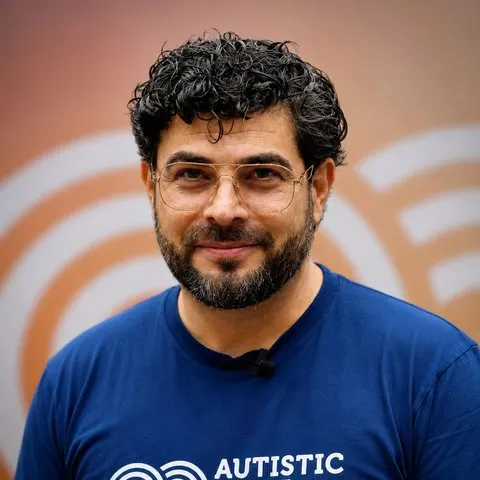 8 minutes 22 seconds, captioned A panellist warned of a lost generation of undiagnosed autistic seniors Kyriakos Gold At the 2023 Autistic Pride Day Symposium, a panellist described a lost generation of older autistic Australians and argued that aged care has to be planned for people who may never get a diagnosis.