

Library / Watch / Think Autism Sydney 2025

Lived experience, Think Autism Sydney 2025
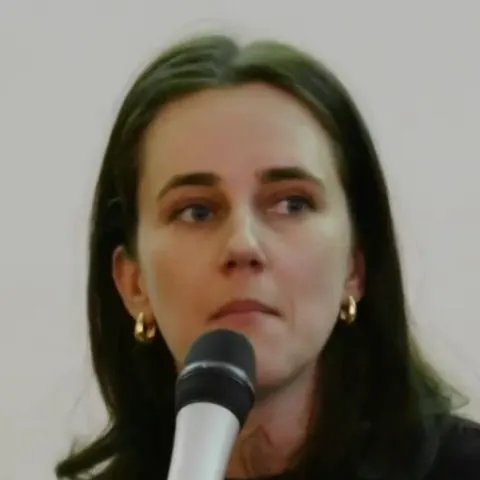
Kate Lambridis turned a spreadsheet about her children’s health into an advocacy app
In short
Once her children were diagnosed autistic, doctors fobbed her off, Kate Lambridis told Think Autism Sydney in May 2025. Her answer was to turn lived experience into data patients could take back into the consulting room.
Read it instead, 5 minutesThe transcript
The story
Kate Lambridis described the moment her children’s medical care changed. Both were diagnosed autistic at around the age of two, she told a panel at Think Autism Sydney on 31 May 2025, and both had other health problems. “I found it incredibly difficult with doctors because the minute they had that label,” she said, and from then on it was very hard to advocate for them about anything she raised. That included, she said, a blood test with a clear marker, iron that was very low.
Her children had intense regressive periods after they got sick, losing skills they had gained. She described watching a child who could speak lose speech, regain it and lose it again. The family could see a pattern, she said, and “we were just being fobbed off by doctors”. So she began keeping records. “So I started in a spreadsheet tracking what I was experiencing,” she said, along with the different things the family was trying to improve the children’s quality of life. She said the spreadsheet helped her daughter come out of those medical cycles.
Sign in to keep reading, listening and watching.
Sign in with your email and everything in the Library is open to you: every story, every talk and every episode. It is free and it always will be. If you can, a donation helps keep it free for everyone.
Sources the story draws on
- Human Health raises $8.5 million to fix broken healthcare systems (opens in a new tab), Forbes Australia (Anastasia Santoreneos)
- Barriers to healthcare and self-reported adverse outcomes for autistic adults: a cross-sectional study (opens in a new tab), BMJ Open (Doherty, Neilson, O'Sullivan, Carravallah, Johnson, Cullen and Shaw)
More from Think Autism Sydney 2025
All 44-
 1 minute 50 seconds, captioned Four founders on what neuroaffirming means once the tick box is gone Anita Aherne, Holly Fowler and 2 more At Think Autism Sydney in May 2025, Anita Aherne asked four founders to define a word everyone was using. Their answers moved from safety and unmasking to individual need, respect and plain kindness.
- 58 seconds, captioned Holly Fowler built Wable with its users and found investors who wanted that Holly Fowler At Think Autism Sydney in May 2025, Wable’s founder described an app reshaped by a year of consultation, and a capital raise in which, to her surprise, the pressure to conform did not arrive.
- 2 minutes 36 seconds, captioned Natasha Siryj said her workplace called itself inclusive and was not Natasha Siryj The Practice Inclusion founder told Think Autism Sydney in May 2025 how a workplace that called itself inclusive turned her into an advocate. Later in the session, a panellist argued that disclosure depends on feeling safe.
- 3 minutes 41 seconds, captioned Think Autism panellists on the health data that could end trial and error care Think Autism Sydney 2025 Asked what they would build with unlimited resources, a panellist at Think Autism Sydney in May 2025 called for a large unbiased dataset to end trial and error care. Another, speaking as a health professional, said it was coming, slowly.
- 1 minute 16 seconds, captioned Téa Rundback asked for spaces built with autistic people already in mind Téa Rundback, Georgia Zentrich At Think Autism Sydney in May 2025, Téa Rundback set the measure of belonging at never having to prove eligibility. Georgia Zentrich explained why autistic people on every side of the support needs line still end up proving themselves.
- 2 minutes 24 seconds, captioned Care is a text that needs no reply, a Think Autism panel heard Georgia Zentrich At Think Autism Sydney in May 2025, panellists argued that autistic community can live online and that care is defined by the people who give and receive it, in small, everyday acts.