

Library / Watch / Autistic Pride Day Symposium 2024

Practice, Autistic Pride Day Symposium 2024
Autistic students catch every word and miss the hint, a Sydney panel heard
In short
An audience member asked the 2024 Sydney education panel to look past the sensory environment to how autistic students process information. The answers described instructions, lectures and assignments built for another kind of mind.
Read it instead, 5 minutesThe transcript
The story
Most of the session’s discussion had been about rooms. The education panel at the Autistic Pride Day Symposium in Sydney in June 2024 had covered lights, noise, air conditioning and the right to leave. Then an audience member asked the panel to move on. The emphasis on environment mattered, the participant said, but there was not enough conversation about processing styles, and about teachers understanding from the inside out what autism actually feels like.
The participant gave an example from their own life. They could barely follow a conversation in real time, they said. One to one might be manageable, but in a group it was not an environmental problem at all. Their brain simply could not process as much as was coming in. They had developed a compensating habit for business meetings. “I take copious notes. I walk out and then work out what the hell just happened.” What frustrated them was that teachers did not know what it really feels like.
Sign in to keep reading, listening and watching.
Sign in with your email and everything in the Library is open to you: every story, every talk and every episode. It is free and it always will be. If you can, a donation helps keep it free for everyone.
Sources the story draws on
- Autistics in Academia: Narratives of Work, Adversity, and Achievement from Around the World (opens in a new tab), Cambridge University Press
- Autistics in Academia (Fifteen Eighty Four blog) (opens in a new tab), Cambridge University Press
- Addendum to the Accreditation of initial teacher education programs in Australia: Standards and Procedures (opens in a new tab), Australian Institute for Teaching and School Leadership
More from Autistic Pride Day Symposium 2024
All 94-
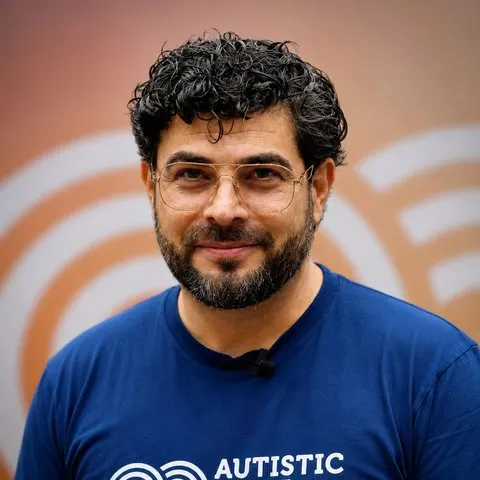 2 minutes 53 seconds, captioned A Sydney panel named the classroom rules that count stillness as learning Kyriakos Gold The education panel at the 2024 Autistic Pride Day Symposium in Sydney began with the rules of an ordinary classroom, and ended by arguing the system that sets them has to change.
- 2 minutes 8 seconds, captioned Why three extra weeks fail autistic students who do not understand the question Autistic Pride Day Symposium 2024 A panellist on the Sydney education panel argued in 2024 that university adjustments are offered from a fixed list, and proposed that autistic people check assessment questions before students ever see them.
- 4 minutes 13 seconds, captioned Autistic university students said they were left to educate their own lecturers Autistic Pride Day Symposium 2024 Research reported at the 2024 Sydney education panel found stigma, discrimination and outdated knowledge among university staff. The proposed next study would question the staff instead of the students.
- 2 minutes 56 seconds, captioned Dr Siobhan Lamb wanted classrooms where no student needed an accommodation Dr Siobhan Lamb At the 2024 Autistic Pride Day Symposium in Sydney, a panellist working in secondary education called neurodivergent students the canaries in the coal mine. A participant who works at Headspace warned that one design rarely fits every young person.
- 1 minute 55 seconds, captioned Schools need openly neurodivergent teachers students can look up to, Sydney panel said Sandra Thom-Jones Panellists at the 2024 Sydney education session argued for visible neurodivergent staff and autistic experts in schools, and described three local examples of schools starting to make that change.
- 2 minutes 6 seconds, captioned Letting autistic students leave an overwhelming room would cost schools nothing, panel heard Marion Rabuka, Sandra Thom-Jones At the 2024 Sydney education panel, Marion Rabuka named the sensory barriers in classrooms and Sandra Thom-Jones argued the cheapest fix was giving students the autonomy to walk out.